
Ann Arbor PFAS in the Huron River: What the Numbers Mean for Your Tap Water
May 28, 2026 · 11 min read · By Aqua Otter Water Systems
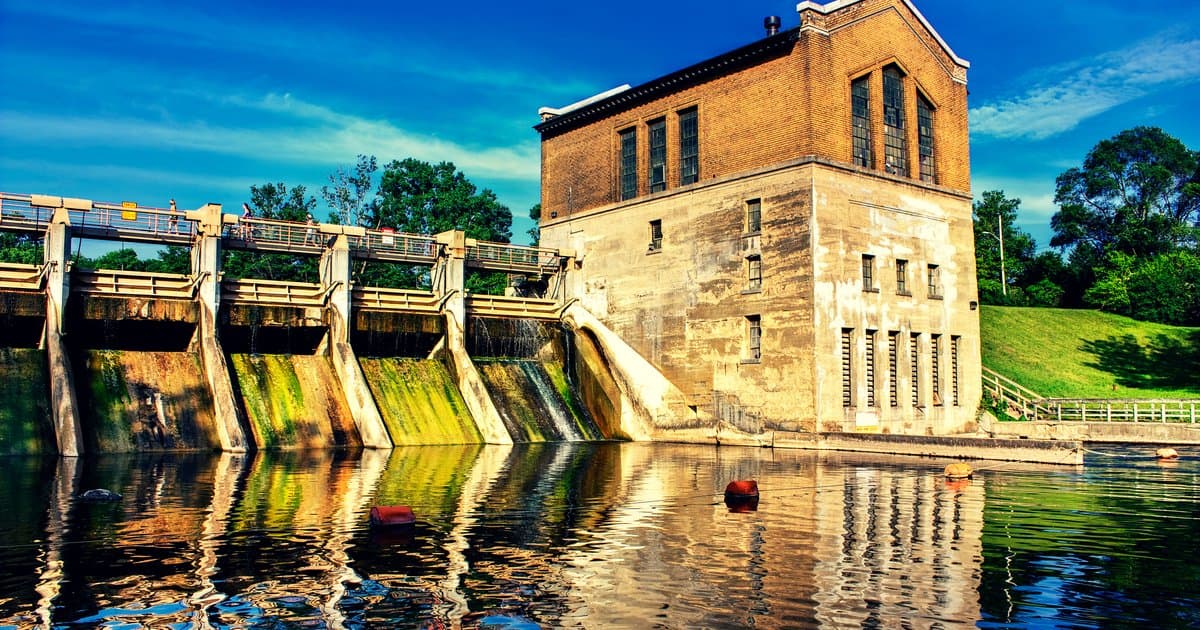
Roughly 85 percent of Ann Arbor's tap water comes from the Huron River, which carries PFAS contamination traced to upstream industrial sources near Wixom. The EPA's 2024 final PFAS rule sets enforceable limits at 4 parts per trillion for PFOA and PFOS, with a compliance deadline of 2029. For Ann Arbor homeowners, certified point-of-use treatment is the most direct fix you control today.
Worried about PFAS in your Ann Arbor home?
Free in-home water test. We test your tap, walk you through the results, and recommend a treatment plan, no pressure.
Schedule free water testWhere your water comes from, and why that matters
Ann Arbor Public Services, through its Drinking Water Utilities Division, blends two sources to produce the water that reaches your tap. The dominant source, around 85 percent, is the Huron River, drawn from Barton Pond just north of the city. The remaining share comes from the Steere Farm wellfield south of town. The Huron River share is treated at the Water Treatment Plant on Sunset Road, where the city runs a multi-stage conventional process that includes lime softening, ozone, granular activated carbon, and chlorination.
The mix matters because surface water and groundwater carry different contaminant profiles. Surface water like Barton Pond reflects everything that happens upstream, including stormwater, industrial discharges, and agricultural runoff. Groundwater is more stable but slower to recover when a contaminant does get in. Ann Arbor's reliance on a single river makes the upstream story directly relevant to what comes out of your kitchen faucet. If you want the broader picture for your specific street, our Ann Arbor service-area page walks through the local hardness, contaminant profile, and what we install most often around Washtenaw County.
The PFAS story: what is in the Huron River
PFAS, short for per- and polyfluoroalkyl substances, is a family of thousands of synthetic compounds used since the 1940s in everything from firefighting foam to nonstick coatings and stain-resistant fabrics. They are sometimes called forever chemicals because they do not break down in the environment and they accumulate in the human body over time. EPA and the Michigan Department of Environment, Great Lakes, and Energy (EGLE) have both documented PFAS contamination throughout the Huron River corridor.
The dominant historical source for the Huron River, identified in multiple state investigations, is industrial discharge from chrome plating operations in the Wixom area, well upstream of Ann Arbor. EGLE has issued do-not-eat fish advisories along several stretches of the river, including reaches downstream of those discharges, because of bioaccumulation in fish tissue. Foam observed along the river has been confirmed to contain elevated PFAS in multiple sampling events. The contamination travels downstream and reaches Barton Pond, which is the intake point for Ann Arbor's drinking water treatment plant. None of this is hypothetical, it is in public state and federal reports.
What the EPA's 2024 rule actually says
On April 10, 2024, the EPA finalized the first ever National Primary Drinking Water Regulation for PFAS, setting enforceable Maximum Contaminant Levels for six specific compounds. PFOA and PFOS each carry an MCL of 4 parts per trillion, which is roughly the limit of what current laboratory methods can reliably measure. PFNA, PFHxS, and GenX each carry an MCL of 10 parts per trillion. There is also a Hazard Index approach that adds up the relative contributions of PFNA, PFHxS, PFBS, and GenX when they appear together, with a Hazard Index limit of 1.
Public water systems must complete initial monitoring by 2027 and meet the new limits by 2029. Utilities that exceed an MCL must take action to reduce levels and must notify the public. This is a significant tightening from the previous EPA health advisories, which were not enforceable and which set guidance levels in the tens to hundreds of parts per trillion range. For homeowners, the rule means two things. First, every U.S. public utility now has a measurable target, and you will see PFAS results in future Michigan water reports. Second, the limits are extremely low, near the practical detection floor, which is why point-of-use treatment makes sense for households that want certainty rather than waiting for utility-side upgrades.
Get a free in-home PFAS conversation
We bring NSF-listed equipment, real Ann Arbor experience, and a plain-English explanation of your CCR. Same-day appointments often available.
Book a free testWhat your CCR tells you, and what it does not
Every public water utility in the United States must publish an annual Consumer Confidence Report (CCR) summarizing what was detected in finished water over the prior calendar year. Ann Arbor publishes its CCR each spring at the city's water utility page. The CCR will list each regulated contaminant, the maximum and average levels detected, the federal MCL, and whether the system was in compliance. Reading your CCR is the single best free check you can do on your own water.
That said, CCRs have limits. They report system-wide averages, not what is in your specific home's plumbing on a given day. They report values as of when monitoring was done, which can lag real-time conditions by months. And because the PFAS MCLs are brand new, the way each utility reports PFAS in its CCR is still evolving. Use the most recent Ann Arbor CCR for the official numbers, and treat the document as a starting point rather than a final answer. If you want a current snapshot of what is at your tap, our free water test covers hardness, chlorine, iron, and TDS on the spot; for PFAS, use a state-certified laboratory.
The two treatment technologies that actually remove PFAS
Two technologies have a long track record of measurable PFAS reduction in residential settings. The first is granular or catalytic activated carbon (GAC) certified to NSF/ANSI 53 for PFOA and PFOS reduction. Carbon works by adsorption, which is the same physical process that pulls chlorine and many other organic compounds out of water. The carbon bed has to be the right type (not all carbon performs the same on PFAS), correctly sized for the home's flow rate, and replaced on a schedule. Our whole-house filtration systems page covers how this works at the point-of-entry.
The second is reverse osmosis (RO) certified to NSF/ANSI 58, typically installed under the kitchen sink. RO pushes water through a semi-permeable membrane that physically blocks PFAS molecules along with most dissolved salts, lead, and a long list of other contaminants. Tested RO systems routinely reduce PFOA and PFOS to non-detectable levels in finished water. The trade-off is wastewater (modern systems are far more efficient than older units) and a slightly slower flow at the dedicated tap. For Ann Arbor homes, the most thorough option is a whole-house carbon stage paired with an under-sink RO, which is what we install most often. Our Ann Arbor reverse osmosis service page lays out the install details.
Recommended method: condition to action
Match your situation to the most appropriate fix. Every row maps to a system or service we install across Washtenaw County and the broader Michigan service area.
| Your situation | Recommended action |
|---|---|
| PFAS concerns focused on drinking and cooking water only | Under-sink RO certified to NSF/ANSI 58 |
| Want PFAS reduction at every fixture, including showers | Whole-house catalytic carbon (NSF/ANSI 53) |
| Both PFAS and Ann Arbor hardness (around 10 grains per gallon) | Softener plus catalytic carbon plus RO |
| Pregnant household member or infant on formula | Under-sink RO as the conservative choice, talk to your pediatrician |
| Private well in Washtenaw County (not city water) | Certified lab PFAS test first, then targeted treatment if detected |
| Renting and cannot install whole-house | NSF/ANSI 53-certified countertop or pitcher filter rated for PFOA and PFOS |
Call a professional if
Most Ann Arbor homeowners can pick a sensible PFAS treatment path with a single in-home consultation. A handful of situations, though, are worth a closer look from a water-treatment professional rather than another internet search.
- You are on a private well in Washtenaw County rather than city water, especially if your property is downstream or sidegradient of a known PFAS site.
- A household member is pregnant, nursing, immune-compromised, or on dialysis, and you want documented removal at the tap rather than relying on the city's compliance timeline.
- Your existing under-sink filter is more than a year old and you do not have records of when the cartridge was last changed.
- You have noticed taste, color, or odor changes alongside the PFAS concern. Combined symptoms usually point to a separate plumbing or fixture issue worth diagnosing.
- You are planning a kitchen remodel or major plumbing change and want to design the treatment system into the layout instead of retrofitting it later.
- You want a real PFAS lab number for your specific tap, not just the system-wide CCR average. A state-certified laboratory test is the right path for that number.
In any of those cases, our free in-home consultation gives you a calibrated baseline for hardness, chlorine, iron, and TDS, and a state-certified laboratory can give you a PFAS number. Customer experiences are on the reviews page, and the full equipment lineup is at the filtration systems page.
What an Ann Arbor install actually looks like
An Ann Arbor PFAS-focused install usually follows the same five-step sequence whether the home is a 1920s brick bungalow near Burns Park or a newer subdivision out toward Scio Township. First, we map the plumbing at the in-home consultation, identifying where municipal water enters, where the softener loop sits if one is already in place, and where the kitchen RO will tie in. Second, we pull a free baseline test and review the most recent Ann Arbor CCR with you so the recommended system is anchored in real numbers.
Third, we install the whole-house catalytic carbon stage at the point of entry, sized to the home's peak flow rate so pressure stays comfortable at every fixture. Fourth, an NSF/ANSI 58 reverse osmosis unit goes under the kitchen sink with a dedicated faucet and a connection to the refrigerator ice maker. Fifth, we leave you with the maintenance schedule, the cartridge part numbers, and a one-page summary of what each stage does. The same playbook is used across Ann Arbor filtration installs and Ann Arbor softener installs. We work across Indiana, Michigan and four other states, and Ann Arbor is the clearest surface-water-with-PFAS case in our area.
Maintenance habits that protect the treatment
A PFAS treatment system is only as good as its maintenance. Carbon and RO media both have finite capacity, and missed changeouts are the most common reason a system stops performing. Build the schedule into your calendar the same way you handle furnace filters and you will get the performance the certification promises. The basic cadence we hand to every Ann Arbor customer covers cartridge intervals, salt checks if a softener is in the loop, and an annual visual inspection of the under-sink RO unit and the storage tank pressure.
- RO sediment and carbon prefilters: replace every 6 to 12 months depending on use and source water.
- RO membrane: replace every 2 to 3 years, sooner if production drops noticeably.
- Whole-house catalytic carbon media: replace per the manufacturer schedule, typically every several years, and confirm with periodic effluent testing.
- Softener salt: check monthly, refill before the brine tank goes dry to protect the resin.
- RO storage tank pressure: check annually, repressurize if production has slowed.
- Visual inspection: look under the sink quarterly for any sign of slow leaks at the fittings.
If a service visit is easier than tracking the schedule yourself, our warranty and service program covers ongoing maintenance, and the financing page covers payment options for the install itself.
How Ann Arbor compares to the rest of our Michigan service area
Ann Arbor is one of a small group of Michigan cities where surface-water PFAS is a documented, traceable, ongoing issue rather than a hypothetical one. Other Michigan systems we serve face different mixes. Customers in the Detroit metro area get a soft Great Lakes Water Authority supply with a real lead-pipe risk in older housing. Grand Rapids runs Lake Michigan water that is hard only at the low end, with disinfection byproducts to manage, and Lansing sits even softer at around six grains per gallon. The Ann Arbor pattern (softer surface water, real PFAS history, an actively engaged utility) sits closer to what you see in some of our broader service-area pages.
The cross-state takeaway is that the right treatment is whatever matches your actual source water, not a one-size-fits-all package. The patterns we have seen across our installs show that Ann Arbor's softer water makes the softener decision more optional than mandatory, while the PFAS history makes the carbon-plus-RO decision close to non-negotiable for households that care about long-term exposure. Our whole-home filtration guide in the learning library covers the technology choices in more depth, and the full blog index tracks the regional water issues we see most often.
Frequently asked questions
Is Ann Arbor tap water safe to drink right now?
Ann Arbor's tap water meets current federal Safe Drinking Water Act standards, and the utility publishes annual results in its Consumer Confidence Report. The longer-term question is the EPA's 2024 PFAS rule, which sets enforceable limits well below previous health advisories. Many Huron River systems are working on treatment upgrades to comply by the 2029 deadline.
Where does Ann Arbor's PFAS contamination come from?
The Huron River has documented PFAS contamination traced primarily to historical industrial discharges upstream in the Wixom area, including chrome plating operations. Michigan EGLE has issued do-not-eat fish advisories along stretches of the river. The contamination moves downstream into Barton Pond, which is Ann Arbor's main drinking water intake.
What does the EPA's 2024 PFAS rule actually require?
EPA's final National Primary Drinking Water Regulation, issued April 2024, sets enforceable limits of 4 parts per trillion for PFOA and PFOS individually, and 10 parts per trillion for PFNA, PFHxS, and GenX. There is also a Hazard Index for mixtures. Public water systems must meet these limits by 2029.
Will a standard refrigerator filter remove PFAS?
Most basic refrigerator filters are not certified for PFAS reduction. Look for a filter that carries an NSF/ANSI 53 certification specifically for PFOA and PFOS reduction, or NSF/ANSI 58 certification for reverse osmosis. The certification mark matters more than marketing claims like 'reduces forever chemicals.'
Does boiling water remove PFAS?
No. Boiling water actually concentrates PFAS because the water evaporates but the PFAS molecules stay behind. The same applies to leaving a glass of water out overnight. PFAS removal requires the right filter media, either certified granular or catalytic activated carbon at point-of-entry or a reverse osmosis system at the kitchen tap.
Do I need both a whole-house filter and a reverse osmosis system?
For Ann Arbor homes worried about PFAS, the layered approach is the standard. A whole-house catalytic carbon stage handles bulk reduction for showers, laundry, and ice makers. An under-sink reverse osmosis system polishes drinking and cooking water to undetectable levels. Either alone helps, both together is the conservative choice.