
Well Water Treatment
Indiana & Michigan
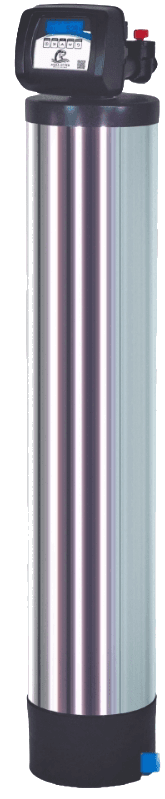
Air injection oxidation removes iron, sulfur, and manganese from well water without chemicals. No staining. No smell. Just clean, clear water from every tap. Pair it with a softener when hardness is high.
10+ mg/L
iron removed
50%
less water waste
Most private wells in Indiana and Michigan carry at least one contaminant that city water never has. Iron at 5 to 12 mg/L turns fixtures orange and wears out appliances fast. Hydrogen sulfide creates the rotten-egg smell that makes water hard to drink or cook with. Manganese causes black stains and raises health concerns above 0.05 mg/L. Indiana wells drawing from glacial till commonly carry iron and hardness together. Michigan wells near shale formations often add hydrogen sulfide to the mix. A certified lab test from an IDEM-approved laboratory shows exactly what your well carries before any system is installed. Aqua Otter’s AiO systems remove iron, sulfur, and manganese without chemicals, using a three-step oxidation process. Every job starts with a free on-site water test. Systems are sized to your well’s specific iron and mineral levels, not sold off a shelf.
This is what iron does to your home
Orange stains. Rotten egg smell. Bacteria risk.
Lab Report, AiO Systems
What the data shows.
mg/L of iron removed from well water without chemicals
10+
of rotten egg hydrogen sulfide odor eliminated on contact
100%
mg/L, EPA manganese limit our systems consistently hit
0.05
less water wasted vs traditional chemical-feed systems
50%
reduction in cleaning product use, fixture staining, and appliance wear
Major
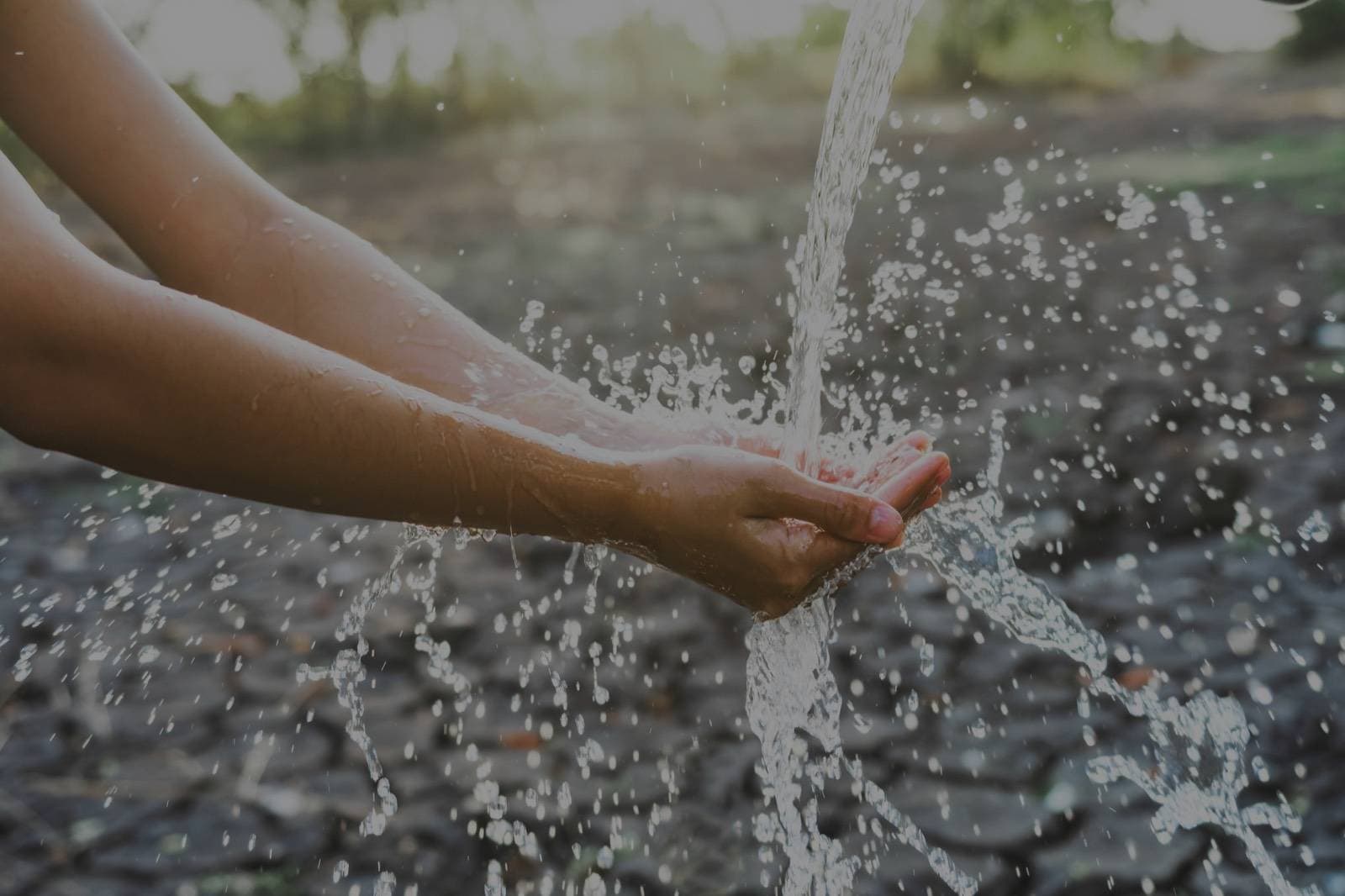
Whatever your well throws at you,
we handle it.
AiO Iron Removal, Visual Proof
See what your well carries.
A typical Indiana well tests between 5 and 12 mg/L iron. The AiO removes all of it. No chemicals, no stains, no smell.
Before treatment
Iron stains every surface

Rust in
your shower
Discolored
tap water
Your well water
Stains, odor,
bacteria risk
After AiO filtration
Crystal clear.
Safe. Pure.

After AiO
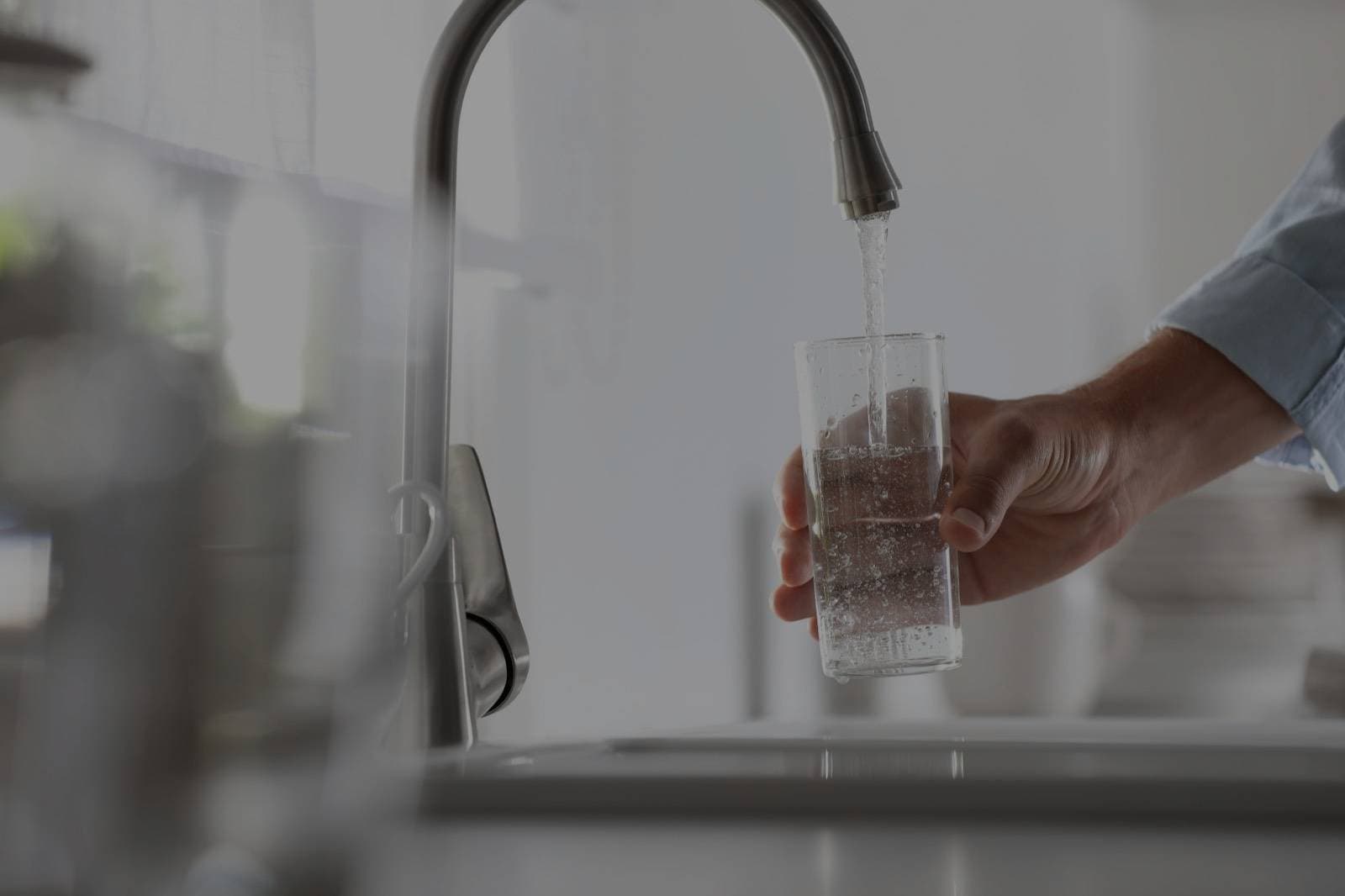
Pure water, every tap

Safe for
your kids

Crystal
clear
Results from AiO field installations. Actual reduction depends on incoming water chemistry.
Air injection oxidation.
Three steps. Zero chemicals.
Air creates an oxidation pocket
As well water enters the tank, a trapped air pocket at the top oxidizes dissolved iron, manganese, and hydrogen sulfide on contact, converting invisible dissolved metals into solid particles the media can capture.
Filtration media traps the solids
Oxidized particles are too large to pass through the media bed. They collect inside the tank while filtered water continues through to every tap in your home, clear, odor-free, and metal-free.
Automatic backwash resets overnight
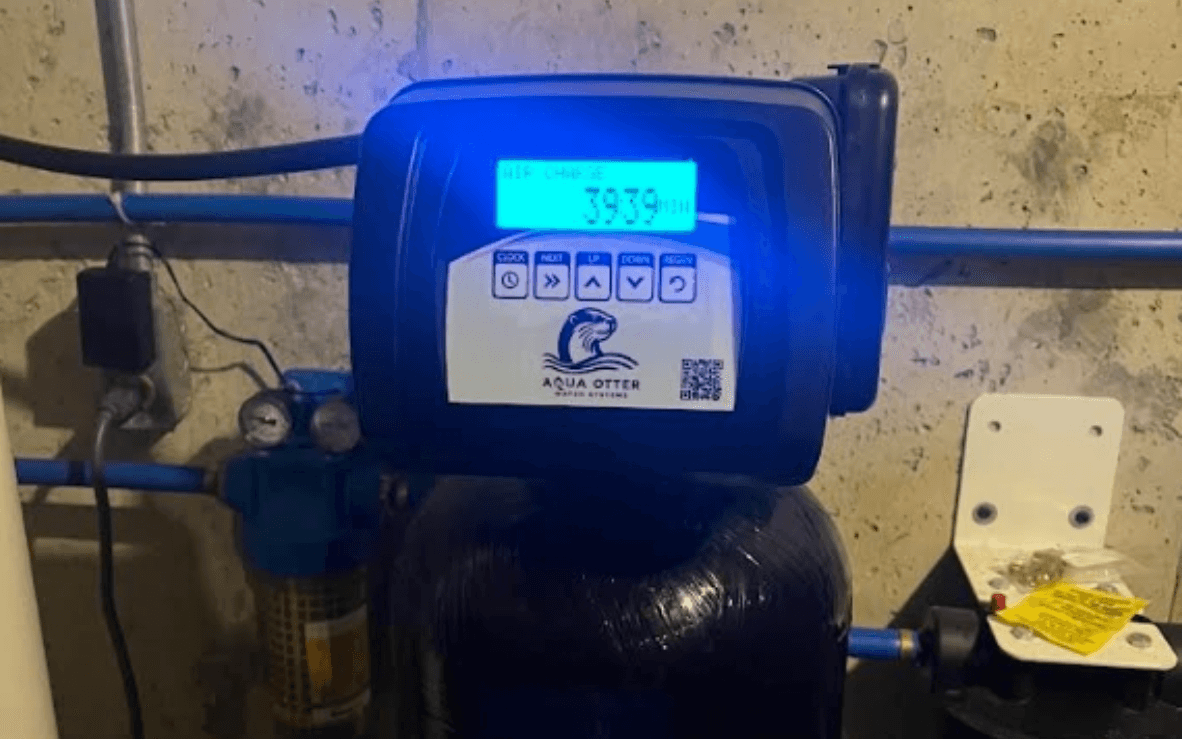
On a timed cycle, the system reverses flow and flushes captured contaminants to drain. No chemicals. No stains. No manual intervention. The air pocket regenerates and the system is ready for the next day.
Inside the AiO Ozone: every part explained
Inside the AiO Ozone. One tank, and everything a difficult well throws at you handled inside it. Air injection oxidation removes iron, manganese, and hydrogen sulfide without a single chemical, and ozone makes that oxidation stronger still. Keep scrolling to go down through it. No chemicals. Automatic backwash. Whole home.
The oxidation pocket. As well water enters the tank, a trapped air pocket at the top oxidizes dissolved iron, manganese, and hydrogen sulfide on contact, converting invisible dissolved metals into solid particles the media can capture. On the AiO Ozone, ozone sanitizes that pocket to raise the oxidation power without leaching chemicals into your water. Iron up to 10+ mg/L. Sulfur odor eliminated. No chemicals required.
Iron and heavy metals. The first of four proprietary medias. Once the air pocket has turned dissolved metals into solids, this bed is where ferric and ferrous iron and heavy metals are trapped, too large now to pass through and reach a tap. Ferric iron. Ferrous iron. Heavy metals.
Sulfur and manganese. The second bed takes on what the first leaves behind: sulfur, the source of rotten egg odor, and manganese, which our systems consistently bring under the 0.05 mg/L EPA limit. Hydrogen sulfide. Manganese. Rotten egg odor.
Herbicides and pesticides. Wells sit under whatever the ground above them carries. The third bed is the one aimed at agricultural runoff, capturing herbicides and pesticides that no amount of oxidation would touch. Herbicides. Pesticides. Agricultural runoff.
PFAS and other chemicals. The last bed is the one for forever chemicals. PFAS and other dissolved chemicals are stripped here, at the bottom of the same tank, before the water is collected and sent on to the house. PFAS. Dissolved chemicals. Final stage.
Vortech distribution basket. Finished water leaves through a slotted basket at the floor of the tank. Spreading the flow evenly across the full width of the bed is what keeps every media working and makes the backwash cycle efficient rather than wasteful. Even flow. Efficient backwash. Maximized performance.
One tank, four medias. Air, ozone, and four proprietary media beds, stacked in a single black tank that backwashes itself overnight. No chemicals to dose, no cartridges to swap, and every tap in the house on the clean side of it. Iron up to 10+ mg/L. Sulfur odor eliminated. Installed by Aqua Otter.
Our Systems
Built for your well.
AiO Well Filtration
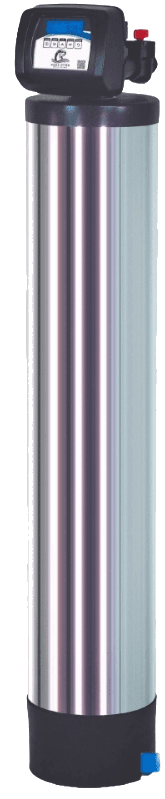
Air injection oxidation removes iron, manganese, and hydrogen sulfide from well water without a single chemical. The oxygen pocket oxidizes contaminants; the media bed captures them; automatic backwash flushes them away.
Not sure which system fits your well?
We test your water on-site before recommending anything. Iron levels, hardness, pH. Free.
Book a free water testAiO Well Filtration
Air injection oxidation removes iron, manganese, and hydrogen sulfide from well water without a single chemical.
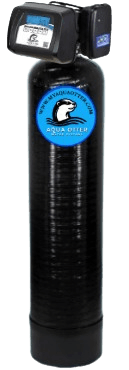
AiO Ozone
Ozone-enhanced air injection for the most challenging well water.
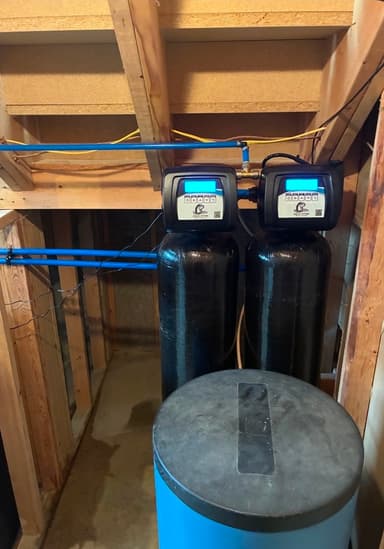
AiO + Softener
AiO filtration paired with a water softener for well water that has both iron and hardness.
Indiana and Michigan Private Well Issues
Iron filters and sulfur treatment:
what each problem needs.
Most Indiana and Michigan wells carry iron, sulfur, or both. The right fix depends on your water test. See the USGS Indiana well water hardness data and our iron and sulfur diagnostic guide for regional context.
Iron filter: what it treats
Indiana and Michigan wells carry two types of iron: dissolved (clear water) and oxidized (red water). The AiO handles both. When water enters the tank, a trapped air pocket turns dissolved iron into solid particles. The media bed then catches those particles. Common signs of iron in your water: orange stains on sinks and laundry, a metallic taste, and buildup in water heaters. Many Indiana wells test above 3 mg/L. Some reach 10 to 15 mg/L.
- Orange or rust staining on fixtures and laundry
- Metallic taste in drinking water
- Red or brown discoloration from the tap
- Buildup inside water heaters and dishwashers
- Iron bacteria forming slime in the tank
Sulfur treatment: how it works
Hydrogen sulfide (H2S) is a gas. It causes the rotten egg smell. It is common in Michigan Lower Peninsula wells and southern Indiana wells. Standard sediment filters cannot remove a gas. The AiO system converts H2S into solid sulfur particles, then flushes them out during backwash. For high sulfide levels or bacteria concerns, the AiO Ozone system uses ozone. Ozone destroys sulfur and bacteria at the same time. See our guide to Indiana and Michigan well contaminants for more context.
- Rotten egg or sulfur smell from any tap
- Odor strongest when hot water runs
- Black staining from sulfur-reducing bacteria
- Taste problems in drinking water and ice
- Corrosion on plumbing fittings and water heaters
Know what you are treating
Indiana well water testing guide
Test your well before you treat it. Indiana law puts water quality in the hands of the well owner. The Indiana State Department of Health (ISDH) and IDEM both keep lists of certified labs for private well testing.
Choose a certified Indiana lab
The Indiana Department of Environmental Management (IDEM) maintains a directory of certified drinking water laboratories at in.gov/idem. The ISDH Laboratory at 550 W 16th St, Indianapolis tests for bacteria, nitrates, metals, and volatile compounds. Many county health departments also accept samples and coordinate with state labs.
Test for the right contaminants
A standard Indiana well test covers coliform bacteria, nitrates, pH, iron, manganese, and hardness. If your well has a sulfur odor, request a hydrogen sulfide test separately. Properties near agriculture should also test for nitrates, atrazine, and arsenic. The nitrate and arsenic guide for Indiana and Michigan wells covers regional risk areas.
Test frequency recommendations
ISDH and EPA recommend annual bacteria testing for private wells and chemical contaminant testing every three to five years. Test immediately after flooding, after nearby construction disturbs the water table, or if water changes in taste, color, or odor. New wells should be tested before first use. Aqua Otter provides a free on-site test covering iron, manganese, hardness, and sulfur before any system recommendation. Read the complete Indiana well water testing guide for more detail.
Skip the lab wait. Get tested on-site, free.
Aqua Otter tests your iron, manganese, hardness, and sulfur levels before recommending anything. No lab required. No obligation. Results in minutes. See what our customers say about the process, or read our well water FAQ.
“We had iron stains on everything, sinks, toilets, the shower. The system fixed it completely. Not a single stain since installation. I wish we had done this years ago.”
Gerald Mitchell
Google Review, AiO Well Water Filtration
Where we install well water treatment
in Indiana, Michigan, and beyond.
Every city has its own water profile. Click your city for the local water report, real hardness numbers, and what we typically install in your zip code.
Indiana
14 citiesMichigan
9 citiesOhio
1 cityKentucky
1 cityTennessee
1 cityNorth Carolina
1 cityDon't see your city? We cover surrounding metros from each of our regional offices. Browse the full coverage map.
View all service areasGet your well water
tested for free.
We test your iron, manganese, hardness, and sulfur levels on-site. No lab. No waiting. No obligation.
Get Your Free Water TestWell Water Treatment Systems | Indiana and Michigan | Aqua Otter
Frequently Asked Questions: Well Water Treatment in Indiana and Michigan
- How do I treat iron in well water in Indiana?
- The most effective method for iron removal from Indiana private wells is air injection oxidation (AiO). As well water enters the tank, a trapped air pocket oxidizes dissolved iron and converts it into solid particles that the media bed captures. Automatic overnight backwash flushes the captured iron to drain. This process removes up to 10+ mg/L of iron without chemicals. For wells with both iron and hardness, pairing an AiO filter with a water softener downstream protects the softener resin from iron fouling.
- What causes rotten egg smell in Indiana well water?
- The rotten egg odor in well water comes from hydrogen sulfide (H2S), a dissolved gas produced by sulfur-reducing bacteria or naturally occurring sulfur compounds in aquifer rock. Indiana and Michigan wells drawing from sandstone or shale formations frequently test positive for hydrogen sulfide. Air injection oxidation systems eliminate hydrogen sulfide on contact by oxidizing it to harmless sulfate particles that are then filtered out. For severe sulfide concentrations, AiO Ozone systems use ozone-enhanced oxidation that is 50 times more powerful than chlorine and destroys sulfur bacteria simultaneously.
- How do I test my well water in Indiana?
- Indiana homeowners should test private wells through an ISDH (Indiana State Department of Health) certified laboratory or an IDEM-approved drinking water lab. The Indiana Department of Environmental Management maintains a list of certified labs at in.gov/idem. Standard private well tests check for coliform bacteria, nitrates, pH, iron, manganese, and hardness. ISDH recommends testing at least once a year for bacteria and every three to five years for chemical contaminants. Aqua Otter provides a free on-site water test that covers iron, manganese, hardness, and hydrogen sulfide before recommending any system.
- What is the EPA limit for iron in drinking water?
- The EPA sets a secondary maximum contaminant level (SMCL) for iron at 0.3 mg/L. Secondary standards are non-enforceable but address aesthetic concerns including taste, odor, and staining. Many Indiana and Michigan private wells test between 2 and 15 mg/L iron, which is 7 to 50 times above the SMCL. At these levels, iron deposits orange or rust-colored stains on sinks, toilets, laundry, and appliances, and accelerates wear on water heaters and washing machines. The EPA SMCL for manganese is 0.05 mg/L; the health advisory value is 0.1 mg/L.
- How often should I test my private well water in Indiana?
- The Indiana State Department of Health and the EPA recommend testing private well water for coliform bacteria every year and for chemical contaminants such as nitrates, iron, manganese, and arsenic every three to five years. Additional testing is advised after flooding, after nearby agricultural activity, or if the water changes in taste, odor, or appearance. A new well or a recently serviced well should be tested before use. IDEM-certified laboratories provide the certified analysis required for most real estate transactions in Indiana.
- What well water problems are most common in Indiana and Michigan?
- The most common private well water problems across Indiana and Michigan are: (1) elevated iron, typically 2 to 12 mg/L, which stains fixtures and laundry orange; (2) hydrogen sulfide producing a rotten egg odor, especially in wells drawing from organic-rich or sulfur-bearing geology; (3) hardness from calcium and magnesium dissolved from limestone and dolomite formations that dominate both states; (4) coliform bacteria risk following flooding or surface runoff events; and (5) nitrates in agricultural areas, particularly in northern Indiana and western Michigan. A comprehensive water test identifies which of these are present at your specific well before any treatment is designed.