
Noblesville Well Water Guide: How to Diagnose Iron, Sulfur, and Hardness on Hamilton County Wells
May 28, 2026 · 11 min read · By Aqua Otter Water Systems
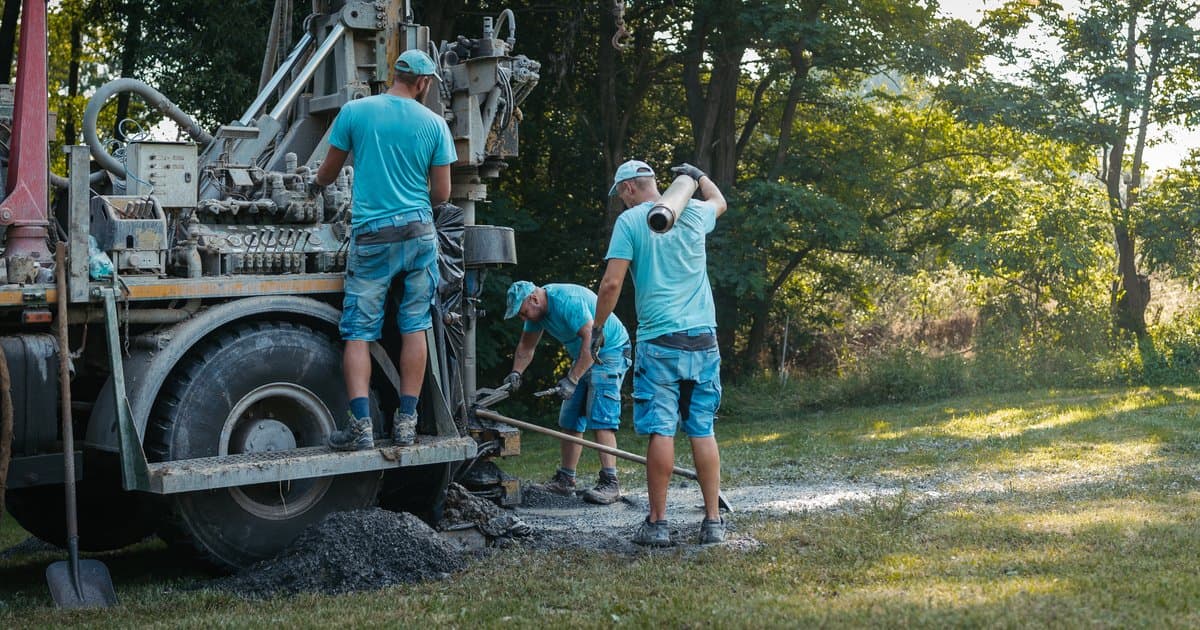
If your Noblesville well water leaves rust stains, smells like rotten eggs, or builds white scale on every fixture, you are dealing with one of three classic Hamilton County problems: iron, hydrogen sulfide, or limestone hardness. The fix is not guesswork. You diagnose by color, temperature, and a water test, then build the treatment train in that order. Here is the diagnostic we use on every Noblesville well call.
On a Hamilton County well?
Free in-home well water test. We test hardness, iron, pH, sulfur, manganese, and bacterial indicators at your tap. Call (248) 621-8411 or book online.
Schedule free well water testWhy Hamilton County wells behave the way they do
Aqua Otter started in Noblesville in 1999. In the decades since, we have walked into basements all over Hamilton County to test water from private wells, and the chemistry tells a consistent story. The county sits on a thick column of glacial drift left behind by the last ice age, with Silurian-age limestone bedrock underneath. Shallower wells, often in the 30 to 120 foot range, draw from the unconsolidated drift aquifer. Deeper bedrock wells reach 200 to 400 feet or more into the limestone.
Both formations contribute the same family of minerals to the water on the way up. The limestone dissolves into calcium and magnesium, which is what makes Hamilton County water some of the hardest in Indiana. Iron-bearing rock and decaying organic matter in the glacial layers contribute dissolved iron and, in low-oxygen pockets, hydrogen sulfide gas and dissolved manganese. None of this is unusual. It is the normal chemistry of a well drilled into a limestone-and-drift aquifer in central Indiana. What changes from one property to the next is how much of each, and that is the part you need to measure.
Color and timing clues: what your symptoms are actually telling you
Before any equipment recommendation, we walk through the same quick visual scan with every Noblesville well owner. Color, where the stain shows up, and whether it changes between hot and cold are surprisingly diagnostic on their own. They do not replace a lab test, but they narrow the suspect list fast.
- Rust-red or orange stains on porcelain toilets, sinks, ice cubes, and white laundry point to iron, almost always in the dissolved ferrous form when the water comes out clear and turns orange in the air.
- Black or dark-brown stains in toilet tanks, on shower walls, or a slate-gray film on the tub usually indicate manganese, which often rides along with iron in the same well.
- Yellow or tea-colored water straight from the tap, without rust staining, suggests tannins from decaying plant matter in a shallower well rather than iron.
- White, chalky scale on faucets, glassware, and inside the kettle is limestone hardness, mostly calcium carbonate.
- Rotten-egg odor at the cold tap or both taps points to hydrogen sulfide upstream of the heater. Odor only on the hot side is almost always a water-heater anode reaction, not a well issue.
- Cloudy, milky water that clears from the bottom up after a minute in the glass is usually just dissolved air, harmless and unrelated to treatment.
The hot-versus-cold test: a 60-second diagnostic you can run right now
The single most useful at-home test for any Hamilton County well owner takes about a minute and tells you whether the sulfur smell you are noticing is a well problem or a water-heater problem. Run the cold tap at the kitchen sink for two full minutes, then fill a clean glass. Step away from the sink, swirl, and smell. Then do the same on the hot side, after running until the water is fully hot.
If only the hot water smells like rotten eggs, the source is almost certainly inside your water heater. The magnesium anode rod that protects the tank can react with naturally occurring sulfate-reducing bacteria in the water and produce hydrogen sulfide. The fix is replacing the magnesium anode with an aluminum or powered anode, not an expensive well treatment system. If both hot and cold smell, the source is upstream of the heater, and you need treatment on the well side. Our complete well water testing guide walks through this and a half dozen other home tests in more detail. For a statewide treatment guide covering the different iron forms found across Indiana wells, see our Indiana iron and sulfur filter guide.
What we measure before recommending equipment
Symptoms get you in the ballpark. Numbers get you to the right system size and media. For every Noblesville well water consult we do, we measure the same baseline panel at your tap. Skipping any of these is how homeowners end up with an undersized softener that fouls in eight months because nobody tested for manganese.
| Parameter | Why we test it | EPA reference |
|---|---|---|
| Total iron | Sets oxidation-tank sizing and media choice | Secondary MCL 0.3 mg/L |
| Manganese | Black staining, fouls softener resin if missed | Secondary MCL 0.05 mg/L |
| Hydrogen sulfide | Drives the need for oxidation upstream of softener | Taste and odor parameter |
| Hardness (GPG) | Sizes the softener and regeneration schedule | No federal limit, comfort issue |
| pH | Affects iron oxidation efficiency and pipe corrosion | Secondary range 6.5 to 8.5 |
| TDS | Overall mineral load, baseline for RO sizing | Secondary MCL 500 mg/L |
Nitrate (EPA limit 10 mg/L as nitrogen) and total coliform and E. coli bacteria need a state-certified laboratory test, which is worth doing for any private well that supplies drinking water, especially in a home with an infant.
The Indiana State Department of Health and the Hamilton County Health Department both recommend annual well testing for coliform bacteria, nitrate, and nitrite. The remaining parameters do not change as quickly, so a three to five year cadence is reasonable unless you notice a taste, color, or odor change. Our guide to water hardness in GPG covers the hardness side of the panel in detail. For the full statewide well testing protocol covering what to test, when, and which labs ISDH recommends, see our Indiana private well testing guide.
Recommended method: matching the well chemistry to the treatment train
Once the lab results are back, the system design follows a predictable order. Iron, sulfur, and manganese get oxidized and filtered out first, hardness gets removed second, and UV polishes the bacteria risk last. Putting the softener ahead of the oxidation stage is the most common mistake we are called in to fix, because the softener resin gets blinded by iron and manganese long before its rated capacity.
| Your well chemistry | Recommended action |
|---|---|
| Iron above 0.3 mg/L, with or without sulfur or manganese | Air-injection oxidation tank as the lead stage, see our well water system |
| Hardness above roughly 10 GPG (most Hamilton County wells run higher) | Ion-exchange water softener downstream of oxidation |
| Any positive coliform result, or any private well used for drinking | UV purification on the polished line |
| Nitrate, arsenic, or any concern for drinking-water specifically | 5-stage reverse osmosis at the kitchen sink |
| Yellow or tea-colored water from tannins, low or no iron | Tannin-specific softener or anion-exchange stage, then standard softener |
| Sulfur smell only on the hot side | Replace water-heater anode rod, no well treatment needed |
DIY checks before you call: what you can do this weekend
Before scheduling a service call, there are a handful of things any Noblesville well owner can verify in an hour. None of them require equipment beyond what is already in the house, and the answers materially change what we recommend when we arrive.
- Find the well drillers log. Indiana DNR has filed copies for most modern wells. The log tells you depth, casing material, screen position, and the aquifer the well was completed in. It is the single most useful document for any treatment design.
- Inspect the well head. The cap should be sealed and at least a foot above grade. Cracked caps, settled wellheads below ground level, or missing vermin screens are common entry points for surface contamination.
- Pull a first-draw sample. Fill a clean glass straight off the cold tap closest to the pressure tank, before any softener or filter, and let it sit for thirty minutes. Iron usually turns orange as the dissolved ferrous iron oxidizes in air. Manganese stays clear longer but settles as a dark deposit.
- Check the pressure tank pre-charge. With the pump off and lines drained, a tire gauge on the air-side schrader valve should read roughly 2 psi below the pump cut-in pressure. A waterlogged tank cycles the pump constantly and masks well issues.
- Walk the property after a heavy rain. If standing water pools near the wellhead within a few hours of a storm, surface water is finding the casing, which is a coliform risk regardless of how the well tests on a dry day.
Document what you find, take photos if anything looks unusual, and we will work through it with you on the in-home visit. Half the calls we go on around Noblesville turn out to involve a small mechanical issue at the well or pressure tank that a treatment system would not have fixed by itself.
What a typical Noblesville well install actually looks like
For a representative Hamilton County well, the moderately deep ones we see in the unincorporated areas around Noblesville, the install train usually lands on three vessels in a row plus a UV chamber and an under-sink RO. The air-injection oxidation tank sits closest to the pressure tank, pulls in a calibrated air pocket at the top, and uses that oxygen to convert ferrous iron to ferric iron and to drive off hydrogen sulfide. The oxidized iron and any manganese drop out onto the catalytic media in the same vessel and backwash to drain on a scheduled cycle. No chemicals to dose, no cartridges to swap.
Behind the oxidation tank, a properly sized softener handles the limestone hardness. Hamilton County wells frequently test well into the very-hard range, so we usually spec a twin-tank or larger single-tank softener with demand-initiated regeneration to keep the salt usage in check. A UV chamber on the polished line gives you a continuous bacteriological barrier without adding any taste or byproducts, which the EPA Safe Drinking Water Act standards specifically credit for primary disinfection. If drinking-water chemistry is on the table, nitrate from agricultural neighbors in the county, or trace arsenic in deeper wells, we add a 5-stage reverse osmosis at the kitchen sink. The full sequence, every Noblesville install, is detailed on the Noblesville well water page.
Call a professional if
Most Hamilton County well chemistry is straightforward to diagnose and treat once you have the numbers in hand. A handful of signals, though, are worth pulling in a professional before you spend money on equipment or DIY a fix that papers over a more serious problem.
- Any positive total coliform or E. coli result. This is a public-health issue and the response is shock chlorination plus a UV barrier, not a softener swap.
- A sudden change in water clarity, color, or odor that was not there last month. New cloudiness can signal a failing well casing, surface-water intrusion, or a nearby agricultural or septic problem.
- Nitrate above 5 mg/L, especially with infants in the home. The EPA MCL is 10 mg/L, but pediatric guidance trends conservative.
- Iron above roughly 8 to 10 mg/L. At that level the oxidation tank needs more aggressive media and longer contact time than a standard residential vessel provides.
- Visible sediment, sand, or grit that has gotten worse over time. The well screen or casing may be deteriorating.
- Pump cycling rapidly, running constantly, or pressure dropping under load. That is a well-pump or pressure-tank problem, not a treatment problem, and it should be diagnosed before any treatment work goes in.
- A neighbor on the same aquifer has recently failed a test for arsenic, lead, or a regulated organic. Aquifer-wide contamination is rare in Hamilton County but not unheard of.
Our team has worked on Hamilton County water since the company started in Noblesville in 1999. Aqua Otter now serves Indiana, Michigan and four other states, and tests private wells as well as city water in Fishers, Carmel, Westfield, and the unincorporated stretches between them.
How Noblesville wells differ from city water in the same neighborhood
One detail that surprises a lot of new well owners: the Noblesville Utilities municipal supply and a private well a quarter mile down the road can deliver very different water out of the same aquifer system. Municipal supply pulls from controlled wellfields, runs through full treatment, sits in a disinfected distribution system, and is tested daily. The annual Consumer Confidence Report from Noblesville Utilities covers everything the EPA requires. The home next door on a private well has none of that infrastructure, which is why diagnostic and treatment responsibility lands on the homeowner.
You can also see the chemistry differences when wells in the same neighborhood are drilled to different depths. A shallow drift well and a deep bedrock well on the same property can produce noticeably different iron, manganese, and hardness numbers. If you have access to the original drillers log filed with the Indiana Department of Natural Resources, it is worth pulling for any well you own. For the city-water side of the same chemistry conversation, the Indianapolis tap water quality overview and Indiana hard water guide cover what shows up at the Hamilton County tap. The broader learn library has deeper science write-ups, including how ion-exchange softening actually works.
Frequently asked questions
How do I know if my Noblesville well has iron or manganese?
Iron stains a rust-red or orange color on porcelain, laundry, and ice makers. Manganese stains brown or black, often showing up as dark specks in toilets or a slate-gray film on the tub. They can both be present in the same well, so a lab test for total iron and total manganese is the only way to know for sure before you size a system.
Why does only my hot water smell like rotten eggs?
If the sulfur smell only shows up on the hot side, the most common cause is the magnesium anode rod inside your water heater reacting with sulfate-reducing bacteria, not your well itself. Switching to an aluminum or powered anode usually solves it. If both hot and cold smell, the source is upstream of the heater and you need well-side treatment.
Do I need to test my Hamilton County well water every year?
Yes. The Indiana State Department of Health and Hamilton County Health Department both recommend annual testing of private wells for total coliform bacteria, nitrate, and nitrite at minimum. Add iron, manganese, hardness, and pH every three to five years, or any time you notice a change in taste, color, or odor at the tap.
What is a typical well depth around Noblesville?
Hamilton County private wells generally fall into two ranges. Shallower wells in the unconsolidated glacial drift aquifer tend to run from roughly 30 to 120 feet, and deeper bedrock wells into the underlying limestone can run 200 to 400 feet or more. Drillers' logs filed with the Indiana DNR are the best record for any specific property.
Can a softener alone fix iron and sulfur on a Noblesville well?
Sometimes, for very low iron and no sulfur, a softener handles it incidentally. But iron above about 2 to 3 ppm, any visible sulfur smell, or any manganese will quickly foul a softener resin bed. The right setup for most Hamilton County wells is an air-injection oxidation tank first, then a softener, then a UV polish.
Is well water safer than city water in Noblesville?
Neither is automatically safer. Noblesville Utilities treats and tests municipal water continuously to EPA Safe Drinking Water Act standards. Private wells have no Consumer Confidence Report and no required testing, so safety on a well depends entirely on the homeowner. A treated, tested, UV-protected well can be excellent. An untested one is a question mark.
Test your Noblesville well water for free
Started in Noblesville in 1999, now headquartered on Fall Creek Road in Indianapolis. BBB A+ accredited. Browse customer experiences on the reviews page or read more on the blog.