
Hard water
ends here.
Ion exchange removes calcium and magnesium at the source. Scale stops forming. Appliances last longer. Skin feels better. You notice the difference in the first week.
85%
of IN homes have hard water
Week 1
families notice results
This is what hard water does
Scale. Stains. Damage. Every single day.
The Real Cost, Hard Water Data
What you're paying for.
spent per year on bottled water in the average hard-water household
$800+
shorter appliance lifespan caused by scale buildup inside pipes and water heaters
30%
drop in water heater efficiency for every 1/4 inch of scale on heating elements
29%
more soap, shampoo, and detergent needed because hard water won't lather
2×
of Indiana homes have hard water above 7 grains per gallon, most above 15
85%

The difference
Soft water.
You'll notice
day one.
Ion exchange.
Three steps. Permanent results.
Hard water enters the resin tank
Water carrying dissolved calcium and magnesium ions flows into the softener tank, which is packed with thousands of resin beads carrying a sodium charge. The minerals are attracted to the resin on contact.
Ion exchange captures the minerals
Calcium and magnesium ions bind to the resin beads. Sodium ions are released into the water in their place. The hard minerals are physically captured inside the tank, not filtered around, but removed.
Soft water flows to every tap
Softened water exits the tank and distributes throughout your home. No scale forming on heating elements, no mineral buildup in pipes, no film on dishes or skin. The resin regenerates automatically overnight.
Our Systems
The right softener
for your home.
Water Softener
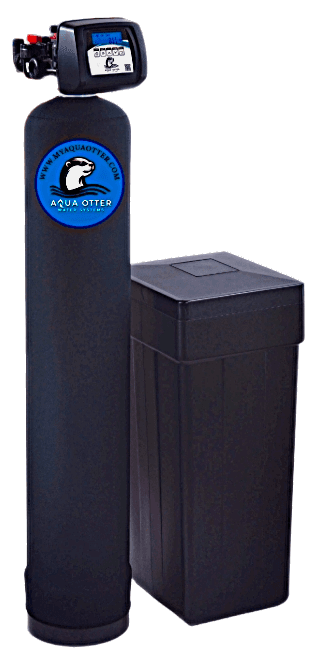
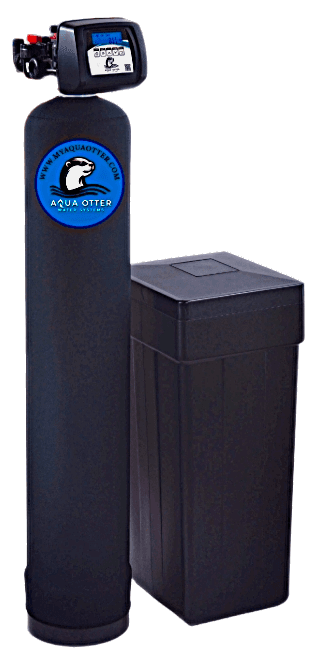
Single-tank ion exchange softener for 1 to 4 person households. High-efficiency demand-initiated regeneration uses salt only when needed, not on a fixed schedule, minimizing operating cost.
Not sure which system fits your home?
We test your hardness on-site before recommending anything. Free test, no obligation.
Book a free water testWater Softener
Single-tank ion exchange softener for 1 to 4 person households.
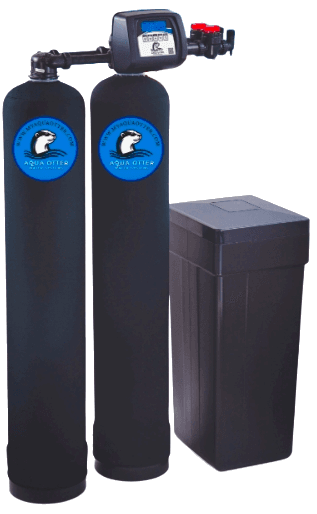
Twin Softener
Dual alternating tanks deliver continuous soft water 24 hours a day, 7 days a week, even during regeneration.
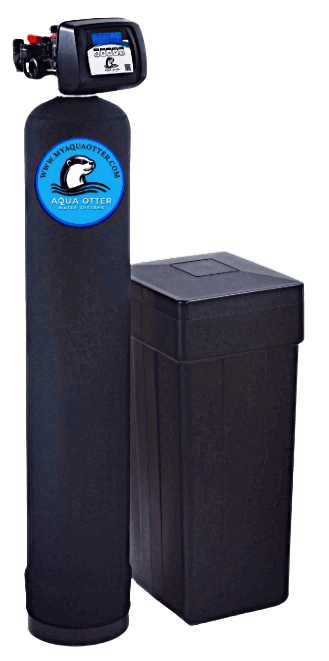
Dual City Softener
Softening and whole-home carbon filtration in a single unit.
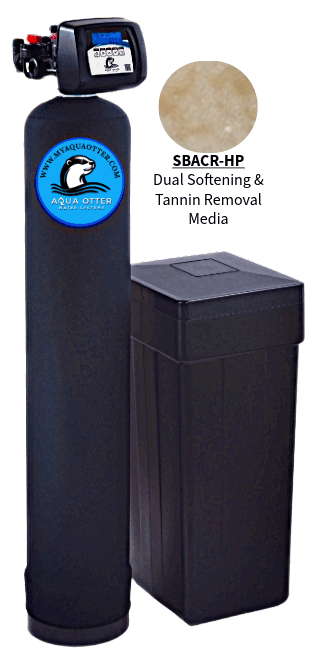
Tannin Softener
Purpose-built for well water with high tannin content.
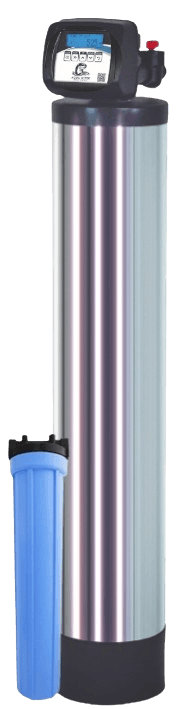
Quintex 5 (No-Salt)
Food-grade phosphate conditioner for homes that prefer no salt, no drain, no electricity.
Specifications
We size the system to your household and your water, not to a catalog default. These are the four standard sizes we install, and other sizes are available when a home needs one.
| Specification | 32,000 grain | 48,000 grain | 64,000 grain | 80,000 grain |
|---|---|---|---|---|
| Grains capacity | 32,000 | 48,000 | 64,000 | 80,000 |
| Grains capacity 1 / capacity 2 | 30K / 24K | 45K / 36K | 60K / 48K | 75K / 60K |
| Cubic ft. material | 1.00 | 1.50 | 2.00 | 2.50 |
| Pounds material | 50 | 75 | 100 | 125 |
| Service flow rate | 9 gpm | 12 gpm | 13 gpm | 18 gpm |
| Approximate dimensions | 33W x 57H x 19D | 34W x 63H x 19D | 36W x 57H x 19D | 37W x 63H x 19D |
| Approximate weight | 98 lb | 124 lb | 152 lb | 219 lb |
| Mineral tank size | 9" x 48" | 10" x 54" | 12" x 48" | 13" x 54" |
| Backwash flow | 2.0 | 2.4 | 3.5 | 4.0 |
- Capacity 1 rated at 15 pounds of salt per cubic foot, which yields 30,000 grains per cubic foot.
- Capacity 2 rated at 9 pounds of salt per cubic foot, which yields 24,000 grains per cubic foot.
- Backwash flow measured with the standard basket distributor.
- Because water conditions, water pressure, and assembly materials vary, treat the service flow rate as a guideline rather than a guarantee.
- The standard resin is certified. System media may vary based on your water analysis so the system is matched to your specific water.
- Sizes other than those shown above are available.
Control valve
The valve is the part that decides when your system regenerates. Ours meters your actual water use rather than running on a fixed clock, which is where the salt and water savings come from.
- Solid state microprocessor with front panel settings
- Three modes of operation: meter immediate, meter delayed, and time clock delayed
- Treated water brine tank refill
- Proportional brining for salt savings
- Double backwash for optimum regeneration and cleaning
- Days override selectable from 1 to 28 days
- Down-flow or up-flow regeneration
- Configuration and operating data held in non-volatile memory
- Capacitor backup carries settings through a two-hour power outage
- 15 VDC transformer
- Back-lit display and simple diagnostics
- Regeneration is delayed if water use is detected within 10 minutes of the start time
Keeping it running
A softener asks very little of you. Keep salt in the brine tank and the system handles the rest on its own schedule.
See the maintenance scheduleInside the Water Softener: every part explained
Inside the Water Softener. A mineral tank packed with thousands of resin beads, a brine tank that holds the salt, and a valve that meters your actual water use. Keep scrolling to walk the path your water takes. Demand-initiated regeneration. 32,000 to 80,000 grain sizes. Sized to your household.
Professional Series control valve. The valve is the part that decides when your system regenerates. It meters your actual water use rather than running on a fixed clock, which is where the salt and water savings come from. Meter driven regeneration. Settings survive power outages. Proportional brining saves salt. Back-lit display.
The resin bed. Thousands of resin beads carrying a sodium charge. Calcium and magnesium ions bind to the beads and sodium is released into the water in their place. The hard minerals are physically captured inside the tank, not filtered around, but removed. Captures calcium and magnesium. Ion exchange, not filtration. Regenerates automatically overnight.
The brine tank. The only part that asks anything of you. Keep salt in the brine tank and the system handles the rest on its own schedule; the valve refills it with treated water and proportional brining uses only the salt each regeneration actually needs. Refill roughly every 4 to 6 weeks. Keep it at least one third full. Treated water refill.
Demand-initiated regeneration. The resin regenerates automatically overnight. Brine drawn from the salt tank washes the captured minerals off the beads, a double backwash cleans the bed, and regeneration waits if water is being used. Runs only when capacity is used. Double backwash. Waits if water is running.
Soft water at every tap. Hard water in at the valve, through the resin bed, and out soft to the whole house. Keep salt in the brine tank and the system handles the rest on its own schedule. Sized to your household. Installed by Aqua Otter. Salt is the only upkeep.
“We had orange stains on everything. Aqua Otter came out, tested our well water, and installed a system that weekend. Two months later, not a single stain. I wish we'd done it years ago.”
Mike & Sarah T.
Noblesville, IN, Water Softener + Well Filtration
Water softener installation in Indianapolis
Indianapolis water runs 17 GPG through Citizens Energy. Full installation guide: process, sizing, 2026 costs, and Marion County ZIP codes.
Where we install water softeners
in Indiana, Michigan, and beyond.
Every city has its own water profile. Click your city for the local water report, real hardness numbers, and what we typically install in your zip code.
Indiana
14 citiesMichigan
9 citiesOhio
1 cityKentucky
1 cityTennessee
1 cityNorth Carolina
1 cityDon't see your city? We cover surrounding metros from each of our regional offices. Browse the full coverage map.
View all service areasFind out if you need
a water softener.
Free in-home water test. We test first, recommend second. No pressure, no obligation.
Get Your Free Water Test