
Michigan Water Hardness Map 2026: County-by-County GPG Data and Treatment Guide
July 31, 2026 · 18 min read · By Larry Foster, Founder · (248) 621-8411
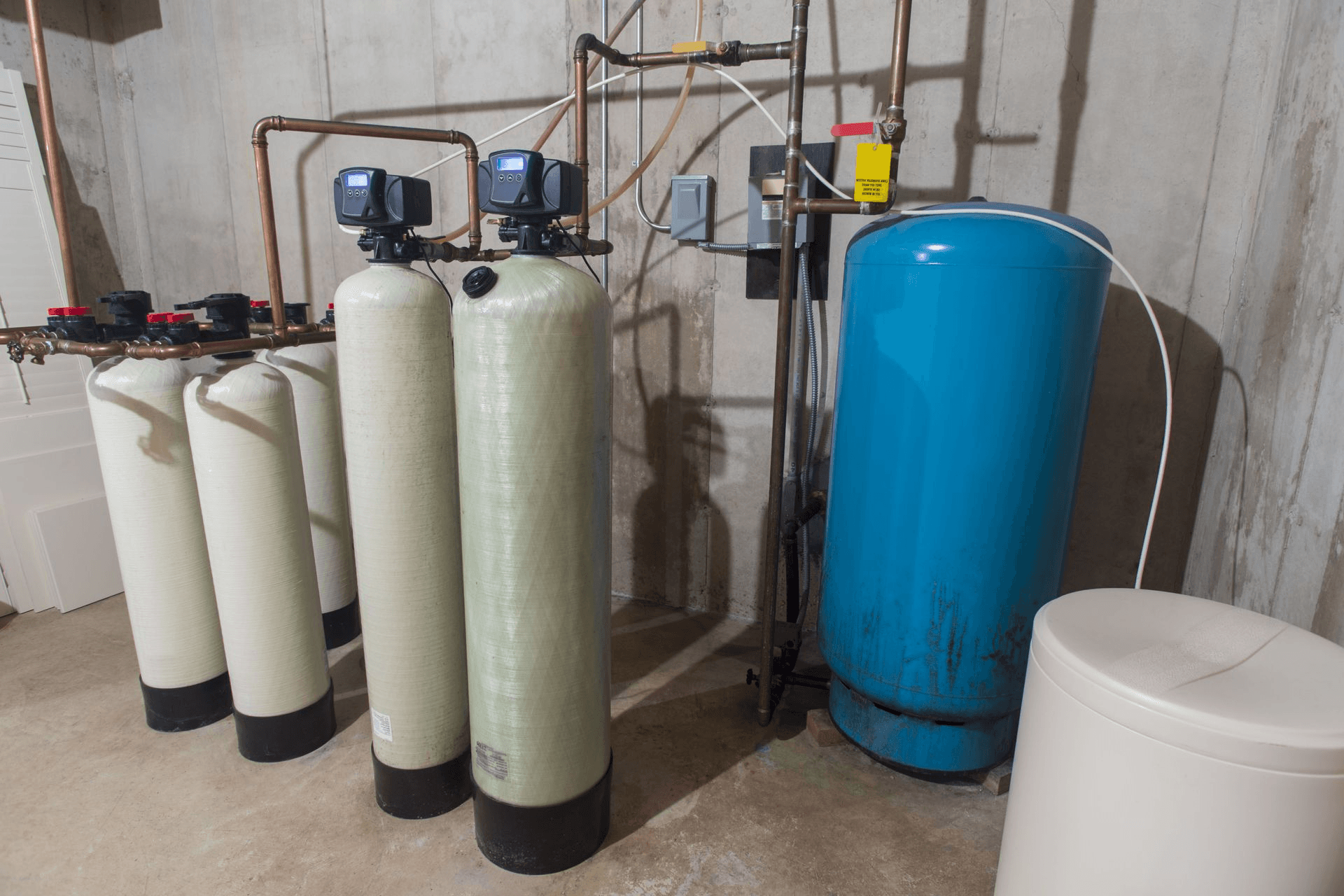
Michigan water hardness is not uniform. The state divides into three distinct hardness zones based on geology and water source. The Upper Peninsula, drawing from Lake Superior, is the softest region in Michigan, with municipal water typically measuring 2 to 5 GPG. Western Lower Peninsula cities on Lake Michigan, including Grand Rapids and Traverse City, run 6 to 9 GPG. Southern Lower Peninsula counties sit above thick limestone and dolomite bedrock from the Michigan Basin carbonate formation, and their groundwater regularly tests at 14 to 22 GPG. Hillsdale and Branch counties hold the state's highest readings. Kalamazoo city, at 19 GPG, is the hardest major Michigan city because it draws from deep groundwater rather than a Great Lake. This county-by-county resource draws on USGS NWIS groundwater sampling data, Michigan EGLE Consumer Confidence Reports, and EPA SDWIS utility records to map actual hardness levels across all 83 Michigan counties and explain what each level means for your home.
Michigan homeowners: free in-home water test
We have served Michigan homeowners since 2019 with offices in Detroit metro and Grand Rapids. Call (248) 621-8411 or use the link below to schedule your free water hardness test.
Schedule free water testWhat is water hardness and how is it measured?
Water hardness measures the concentration of dissolved calcium and magnesium ions in water. Both minerals leach into groundwater as it moves through limestone, dolomite, and gypsum rock formations. The more time water spends in contact with these minerals and the more soluble the rock, the harder the water becomes. Surface water from the Great Lakes is softer because it spends less time underground and the glacial Great Lakes basins dilute mineral concentrations at massive volume.
The USGS hardness classification scale uses milligrams per liter (mg/L) as calcium carbonate (CaCO3). The equivalent grains per gallon (GPG) values are:
| Classification | mg/L as CaCO3 | GPG | Michigan examples |
|---|---|---|---|
| Soft | 0 to 60 | 0 to 3.5 | Marquette, Houghton (UP) |
| Moderately hard | 61 to 120 | 3.6 to 7 | Lansing, Traverse City, Grand Rapids (low end) |
| Hard | 121 to 180 | 7.1 to 10.5 | Grand Rapids, Ann Arbor, Detroit metro |
| Very hard | above 180 | above 10.5 | Kalamazoo, Jackson, Hillsdale, Branch |
Source: USGS Water Science School — Hardness of Water. Convert mg/L to GPG by dividing by 17.1.
Understanding what grains per gallon means for your home is the foundation of treatment sizing. A softener that works for 10 GPG needs to be almost twice the capacity for 19 GPG with the same family size.
Michigan water hardness by region: Upper Peninsula vs Lower Peninsula
Michigan's two peninsulas have fundamentally different water hardness profiles driven by geology and water source. The divide is one of the sharpest regional hardness gradients in the Midwest.
Upper Peninsula. The UP sits primarily on Precambrian crystalline bedrock, the oldest and most geochemically stable rock in the region. Lake Superior, from which most UP municipalities draw, is the largest, deepest, and least mineralized Great Lake. According to the EPA Great Lakes Monitoring program, Lake Superior's average calcium concentration is approximately 13 mg/L and total hardness averages around 45 to 55 mg/L as CaCO3 (2.6 to 3.2 GPG), making it significantly softer than Lake Michigan at roughly 110 to 130 mg/L (6.4 to 7.6 GPG). UP homeowners on city water rarely need a traditional salt-based softener, though iron and manganese treatment are common for those on private wells tapping the deep crystalline aquifer.
Lower Peninsula, Lake Michigan influence. Western Lower Peninsula cities drawing from Lake Michigan include Grand Rapids, Muskegon, Holland, Traverse City, and Ludington. Lake Michigan water averages 120 to 140 mg/L as CaCO3 (7 to 8.2 GPG) according to USGS Great Lakes Science Center monitoring data. That puts these cities in the moderately hard to hard zone, where a no-salt conditioner or low-capacity softener is often the right fit rather than a full ion-exchange system.
Lower Peninsula, eastern and southeastern. The Detroit metro draws from Lake Huron via the Great Lakes Water Authority (GLWA), the largest surface water system in the world by treatment capacity. Lake Huron hardness averages approximately 120 to 165 mg/L as CaCO3 (7 to 9.6 GPG) depending on season and sampling location. The Michigan EGLE annual water quality reports show GLWA-served municipalities, including Detroit, Livonia, Dearborn, Sterling Heights, and Warren, consistently in the 7 to 10 GPG range at the tap. The Michigan water hub covers our service across the state.
Lower Peninsula, southern groundwater belt. The most important hardness story in Michigan is the southern groundwater belt, stretching across Kalamazoo, Calhoun, Jackson, Lenawee, Hillsdale, and Branch counties. These counties overlie the Michigan Basin, a geological depression filled with thick sequences of Devonian and Silurian carbonate rock, primarily limestone and dolomite, from 300 to 400 million years ago. Groundwater percolating through those formations dissolves calcium and magnesium at rates that produce hardness values of 14 to 22 GPG, the highest in the state. This is the zone where a full ion-exchange water softener is not optional for homeowners who want to protect appliances and plumbing.
Michigan water hardness by county: data table
The data below is compiled from USGS National Water Information System (NWIS) groundwater quality records, Michigan EGLE water resource data, and EPA Safe Drinking Water Information System (SDWIS) utility records. Ranges reflect the variation between municipal tap water (typically blended and treated) and private well water in the same county. Municipal customers generally experience the lower end of the range; private well users may test at the higher end depending on well depth and local geology.
| County | Region | Typical GPG | Primary source |
|---|---|---|---|
| Hillsdale | Southern LP | 18 to 22 | Groundwater (limestone bedrock) |
| Branch | Southern LP | 17 to 21 | Groundwater |
| Lenawee | Southern LP | 14 to 18 | Groundwater / Raisin River |
| Jackson | Central LP | 12 to 16 | Groundwater / Grand River |
| Kalamazoo | Southwest LP | 17 to 20 | Groundwater wells |
| Calhoun | Southwest LP | 12 to 17 | Groundwater / Kalamazoo River |
| Barry | West-Central LP | 10 to 14 | Groundwater |
| Eaton | Central LP | 9 to 13 | Groundwater / Thornapple River |
| Saginaw | Central LP | 10 to 14 | Groundwater / Tittabawassee R. |
| Genesee | Central LP | 9 to 12 | GLWA (Flint River blended) |
| Washtenaw | Southeast LP | 8 to 12 | Huron River |
| Wayne | Southeast LP | 7 to 10 | GLWA (Lake Huron) |
| Macomb | Southeast LP | 7 to 10 | GLWA (Lake Huron) |
| Oakland | Southeast LP | 7 to 10 | GLWA (Lake Huron) |
| Kent | West LP | 7 to 9 | Lake Michigan |
| Muskegon | West LP | 6 to 9 | Lake Michigan |
| Ottawa | West LP | 6 to 9 | Lake Michigan / groundwater |
| Ingham | Central LP | 5 to 7 | Municipal wells (Lansing) |
| Grand Traverse | Northwest LP | 4 to 8 | Lake Michigan / Grand Traverse Bay |
| Marquette | Upper Peninsula | 2 to 5 | Lake Superior |
| Houghton | Upper Peninsula | 2 to 5 | Lake Superior / Portage Lake |
| Delta | Upper Peninsula | 5 to 10 | Groundwater / Bay de Noc |
| Chippewa | Upper Peninsula | 3 to 7 | Lake Superior tributary |
Data sources: USGS NWIS, Michigan EGLE, EPA SDWIS. Ranges represent typical variation across both municipal and private well sources. Verify your specific hardness with a free in-home test.
Hardest water cities in Michigan
The cities with the highest documented water hardness in Michigan are concentrated in the southern Lower Peninsula groundwater belt. These cities either draw from deep groundwater wells or receive water blended from high-hardness aquifers:
- Kalamazoo (Kalamazoo County) at approximately 19 GPG, sourced from municipal groundwater wells in the Kalamazoo River basin aquifer. Kalamazoo city water system Consumer Confidence Reports confirm hardness typically runs 310 to 340 mg/L as CaCO3. See our Kalamazoo service area page for local treatment details.
- Jonesville and Hillsdale (Hillsdale County) at 18 to 22 GPG from limestone-bearing glacial drift aquifers. These are among the highest hardness municipal readings in the state.
- Coldwater and Branch County municipalities at 17 to 21 GPG, with similar geology to Hillsdale County.
- Jackson (Jackson County) at 12 to 16 GPG, sourced partly from the Grand River alluvial aquifer and partly from deeper carbonate formations.
- Tecumseh and Adrian (Lenawee County) at 14 to 18 GPG from deep groundwater sources in the Erie-Huron carbonate bedrock sequence.
Homeowners in these areas often notice the effects before they ever test: white scale on faucets and showerheads, soap that does not lather well, spots on dishes, stiff laundry, and shortened appliance life. A full ion-exchange water softener is the standard recommendation for any home above 12 GPG in Michigan. Our home solutions page explains the treatment options and what each addresses.
Softest water cities in Michigan
Michigan's softest municipal water is in the Upper Peninsula and in cities drawing directly from Lake Superior, which the EPA Great Lakes monitoring program consistently identifies as the least mineralized of the five Great Lakes by dissolved solids concentration:
- Marquette (Marquette County): 2 to 4 GPG. Lake Superior source water. One of the softest municipal supplies in the Midwest.
- Houghton (Houghton County): 3 to 5 GPG. Lake Superior and Portage Lake source. Keweenaw Peninsula geology is copper-bearing Precambrian basalt rather than carbonate rock, contributing to very low hardness.
- Sault Ste. Marie (Chippewa County): 3 to 7 GPG. Saint Marys River source, directly connected to Lake Superior flows.
- Lansing (Ingham County): approximately 6 GPG. Municipal wells drawing from the Saginaw aquifer in the Lansing area produce lower hardness than the southern groundwater belt.
- Traverse City (Grand Traverse County): 4 to 7 GPG. Grand Traverse Bay arm of Lake Michigan is one of the clearer, less mineralized sections of the lake.
- Grand Rapids (Kent County): approximately 8 GPG. Lake Michigan source via the Michigan Lake Source Recovery program. For Grand Rapids treatment specifics, see our article on reverse osmosis installation in Grand Rapids.
In these cities, a no-salt template conditioner like the Quintex 5 is often the right call rather than a full salt-based softener. Salt softeners are designed to remove hardness through ion exchange. At 4 to 8 GPG, the scale formation is modest enough that a template-assisted crystallization (TAC) system prevents buildup without the maintenance and salt cost of an ion-exchange unit.
How Michigan water compares to the national average
The USGS National Water-Quality Assessment Program has measured hardness across the contiguous United States. The national median hardness for public water systems is approximately 7 to 9 GPG (120 to 155 mg/L as CaCO3). Michigan's state-level profile straddles that median: the Upper Peninsula and western Lower Peninsula are below it; the southern Lower Peninsula is well above it.
For comparison: Indiana, which we also serve extensively, is consistently harder than most of Michigan. Indianapolis runs 16 to 19 GPG and Fishers, Hamilton County runs 19 GPG, reflecting the state's limestone-dominated geology statewide. Michigan is more geologically diverse because of the Great Lakes moderating influence on western and northern communities. The Michigan cities hard water guide covers Detroit, Grand Rapids, Ann Arbor, Kalamazoo, and Lansing in detail. Michigan's hardness geography is also discussed in our broader Michigan water treatment hub.
The AWWA (American Water Works Association) 2021 State of the Water Industry report, available at awwa.org, notes that roughly 85% of U.S. homes receive water classified as hard or very hard. Michigan's southern counties track with that national reality; its northern and western communities are a notable exception.
What hard water does to your Michigan home
Hard water effects are cumulative and slow, which is why many homeowners do not connect the symptoms to their water hardness until damage is already done. The mechanisms are well documented in engineering and plumbing literature:
Water heater efficiency loss
Scale accumulates on tank water heater heating elements and tank walls. The U.S. Department of Energy water heating resources note that scale buildup from hard water forces the heating element to work harder to transfer heat through the mineral coating. A 2009 study sponsored by the Water Quality Research Foundation (now part of WQA) found that untreated hard water can reduce water heater efficiency by up to 29% at 26 GPG, with measurable losses beginning at hardness levels above 10 GPG. Verify the full methodology in the Water Quality Association appliance efficiency technical fact sheet.
Appliance and plumbing lifespan
Dishwashers, washing machines, and ice makers with internal water passages accumulate scale deposits that restrict flow and increase mechanical stress on pumps and valves. The same WQA-sponsored research found that dishwashers using hard water required 30 times more detergent to achieve the same cleaning performance compared to softened water, and washing machines accumulated significant scale buildup within 30 washes. For Michigan homeowners in the southern groundwater belt above 14 GPG, this translates to real appliance replacement cost compressed into shorter cycles. Our Ann Arbor filtration service page discusses what water treatment means for appliance protection in practice.
Skin, hair, and soap performance
Calcium and magnesium ions in hard water react with soap to form calcium stearate (soap scum), reducing lather and leaving residue on skin and hair. The practical effects are well-recognized and often the first thing homeowners notice after installing a softener: softer-feeling skin, hair that does not feel as dry, and significantly less soap usage. These are physical chemistry effects, not marketing claims. See our page on well water treatment in Michigan for homes on private wells where hardness is often higher and more variable than city water.
Scale on fixtures and faucets
White, chalky deposits on faucets, showerheads, and tile grout lines are calcium carbonate precipitate. Above 10 GPG, scale accumulates visibly on surfaces that dry quickly after water contact. At 19 to 22 GPG, southern Michigan homeowners typically see visible deposits within weeks of a new install or renovation. The scale is mechanically removable with acid-based cleaners, but it will return within the same timeframe as long as the underlying hardness is untreated. A properly sized softener eliminates new scale formation entirely at the point of entry.
Water softener options and sizing for Michigan hardness levels
Treatment selection in Michigan depends on which hardness zone you are in. Here is the framework we use after hundreds of installs across Indiana and Michigan since 1999:
| Hardness range | Michigan areas | Recommended treatment | System size (4 people) |
|---|---|---|---|
| 0 to 4 GPG (soft) | Marquette, Houghton, UP cities | No softener needed. Carbon filtration if taste is a concern. | N/A |
| 4 to 8 GPG (mod. hard) | Grand Rapids, Lansing, Traverse City, GLWA metro lower end | No-salt TAC conditioner (Quintex 5). Carbon + RO for taste. | No-salt system |
| 8 to 12 GPG (hard) | Detroit metro, Ann Arbor, Washtenaw County | Ion-exchange softener or high-capacity no-salt. RO for drinking water. | 32,000 to 40,000 grain |
| 12 to 18 GPG (very hard) | Jackson, Calhoun, Lenawee, upper Kalamazoo | Ion-exchange softener. Salt required. RO strongly recommended. | 40,000 to 48,000 grain |
| Above 18 GPG (extreme) | Kalamazoo city, Hillsdale, Branch counties | High-capacity ion-exchange softener. RO for drinking water. Iron pre-filter if iron present. | 48,000 to 64,000 grain |
Softener grain capacity sizing uses a straightforward formula. Multiply your hardness in GPG by your daily water use in gallons (typically 75 to 80 gallons per person per day) by the number of people in the household by the desired number of days between regeneration cycles (typically 7). The result is the minimum grain capacity needed. Michigan well water often adds iron to the calculation: for every 1 ppm of iron, add 4 to 5 GPG to your hardness figure for sizing purposes. Our Ann Arbor service area page covers sizing specifics for Huron River-source water. For groundwater well homes, the well water systems page addresses iron and manganese co-treatment.
One additional consideration for southern Michigan and Kalamazoo specifically: PFAS contamination in the Kalamazoo River corridor means we routinely recommend adding an under-sink reverse osmosis unit alongside the softener for drinking water. The softener removes hardness; the RO handles dissolved organics, PFAS, nitrates, and taste concerns. See our whole-home water solutions overview for how the two systems work together.
Free Michigan water test: know your exact GPG
The data above shows ranges. Your specific hardness depends on your exact location, well depth (for well water), and current utility blend ratios. Call us or schedule online for a free in-home test that gives you the actual number at your tap. Detroit metro and SE Michigan: (248) 621-8411.
Schedule your free water testMethodology: how this hardness data was compiled
The county-by-county hardness ranges in this guide are derived from three primary data sources, all of which are publicly available and maintained by federal and state agencies:
USGS National Water Information System (NWIS). The USGS maintains a database of groundwater and surface water quality measurements collected at monitoring sites across the United States. For Michigan, this includes thousands of historical and current groundwater sampling records from domestic wells, monitoring wells, and surface water stations. Hardness data is reported as calcium concentration and/or total hardness as CaCO3 in mg/L. Records are accessible at waterdata.usgs.gov/nwis/qw. For each Michigan county, we reviewed multiple NWIS sampling records to establish typical ranges. Ranges reflect the 25th to 75th percentile of available sampling records to exclude outlier readings while capturing the real variation in each county.
Michigan EGLE Consumer Confidence Reports. Michigan's Environment, Great Lakes and Energy department requires all community water systems to publish annual Consumer Confidence Reports (CCRs) that include measured water hardness. These CCRs report the actual hardness delivered to taps in municipal service areas. For counties served by multiple utilities (common in Michigan), we reviewed CCR data from the largest utility in each county. CCR data is archived at the Michigan EGLE water resources annual reports portal. Municipal CCR values typically represent treated and blended water, which can be softer than raw groundwater in the same county.
EPA Safe Drinking Water Information System (SDWIS). The EPA SDWIS database contains regulatory compliance data for public water systems, including water quality monitoring results submitted by utilities under the Safe Drinking Water Act. SDWIS is accessible at sdwis.epa.gov. We cross-referenced SDWIS records with NWIS and EGLE CCR data to verify consistency and flag discrepancies. Where SDWIS and CCR data differed significantly, we used the CCR value for municipal areas and NWIS for rural/well-water estimates.
Important limitations. Hardness in any given home depends on the specific utility blend, current season (surface water hardness varies seasonally), and for well water, the exact depth and geological formation the well penetrates. The ranges in this guide are starting points. A free in-home test is the only way to know your exact hardness. Contact our team at (248) 621-8411 or see our Ann Arbor filtration service page and other Michigan city pages for local context.
Frequently asked questions about Michigan water hardness
How hard is Michigan water?
Michigan water hardness varies more than most residents expect. The softest areas are Upper Peninsula cities drawing from Lake Superior, where hardness can be as low as 2 to 4 GPG. Lake Michigan-source cities like Grand Rapids average 8 GPG. The hardest water in Michigan is found in the southern Lower Peninsula groundwater belt, where Hillsdale, Branch, and Lenawee county wells regularly test at 18 to 22 GPG. On the USGS hardness scale, any water above 10.5 GPG (180 mg/L as CaCO3) is classified as hard, and above 14 GPG is very hard. Most of southern Michigan falls into those categories. Verify your specific hardness with a free in-home water test.
What county in Michigan has the hardest water?
Based on USGS NWIS groundwater sampling data for Michigan and Michigan EGLE Consumer Confidence Reports, Hillsdale and Branch counties consistently measure the highest hardness values in the state, with groundwater samples frequently testing at 18 to 22 GPG (310 to 380 mg/L as CaCO3). These counties sit above thick limestone and dolomite bedrock from the Michigan Basin carbonate formation, which dissolves calcium and magnesium into groundwater as it percolates through. Lenawee and Jackson counties are close seconds at 14 to 18 GPG. Municipal water customers in those counties receive some blending that can lower tap hardness below raw groundwater values.
Do I need a water softener in Michigan?
It depends entirely on where in Michigan you live and what your water source is. If you are in the Upper Peninsula on a Lake Superior-source utility, you probably do not need a traditional softener. If you are on city water in Grand Rapids or Lansing, a no-salt conditioner may be sufficient at 6 to 8 GPG. If you are on well water or city water in southern Michigan counties like Hillsdale, Branch, Lenawee, or Jackson, and especially if you have Kalamazoo groundwater at 19 GPG, a full ion-exchange softener is the right call. The damage thresholds are real: water heater efficiency drops measurably above 7 GPG, and appliance life shortens above 10 GPG. A free in-home test gives you the exact number for your tap.
What is water hardness measured in for Michigan?
Michigan water hardness is reported in two units: grains per gallon (GPG) and milligrams per liter as calcium carbonate (mg/L as CaCO3). The USGS uses mg/L in its NWIS database. Michigan EGLE Consumer Confidence Reports typically use mg/L as well. To convert: divide mg/L by 17.1 to get GPG. So 171 mg/L equals 10 GPG. The hardness classification scale from the USGS is: 0 to 60 mg/L (0 to 3.5 GPG) is soft; 61 to 120 mg/L (3.6 to 7 GPG) is moderately hard; 121 to 180 mg/L (7.1 to 10.5 GPG) is hard; above 180 mg/L (above 10.5 GPG) is very hard. Most of southern Michigan falls in the very hard category.
What are the softest water cities in Michigan?
The softest municipal water in Michigan comes from cities drawing directly from the Great Lakes, particularly Lake Superior. Marquette and Houghton in the Upper Peninsula are among the softest, typically 2 to 5 GPG, because Lake Superior is the least mineralized of the Great Lakes by volume. Traverse City and other cities on Grand Traverse Bay drawing from Lake Michigan typically run 4 to 7 GPG. Grand Rapids at 8 GPG and Lansing at 6 GPG are the softest major metro areas. Flint, once on Flint River water and now restored to GLWA supply, is approximately 8 to 10 GPG. The hardest major city in Michigan is Kalamazoo at 19 GPG, drawing from deep groundwater rather than a Great Lake.
How do I size a water softener for Michigan water hardness?
Softener sizing in Michigan depends on three variables: your water hardness in GPG, household size (people), and iron content. The standard formula is: daily grain removal needed equals hardness (GPG) multiplied by daily water use in gallons. For a 4-person home using 75 gallons per person per day, that is 300 gallons daily. At 19 GPG (Kalamazoo or southern Michigan), daily grain load is 5,700 grains. A softener regenerating every 7 days needs 39,900 grain capacity. We typically recommend a 48,000-grain system for a 4-person Michigan home at very hard water levels, with a 64,000-grain system for homes above 20 GPG or with iron above 1 ppm. Iron adds 5 GPG equivalent to the hardness calculation for sizing purposes.
Data sources: USGS NWIS · Michigan EGLE · EPA SDWIS · USGS Water Science School. Hardness ranges are typical values from public data. Verify with a free in-home test before treatment decisions. Michigan EGLE and USGS data should be consulted for current official values.
Related: Michigan water treatment hub · Michigan cities hard water guide · What is GPG? Water hardness explained · Water softener systems · Kalamazoo service area · Ann Arbor service area · Grand Rapids service area · Detroit metro service area · Lansing service area · Michigan well water treatment · Home water solutions